January 24, 2014


What Say You?  David Finkel. Diversity. Pluralism. Harmony.
SUSAN CLOKE
Columnist, Santa Monica Mirror
January 24, 2013

David Finkel is an attorney who has served as a Judge on the Santa Monica Court, a Rent Control Board Member, a City Council Member and, most recently, a College Board Member.

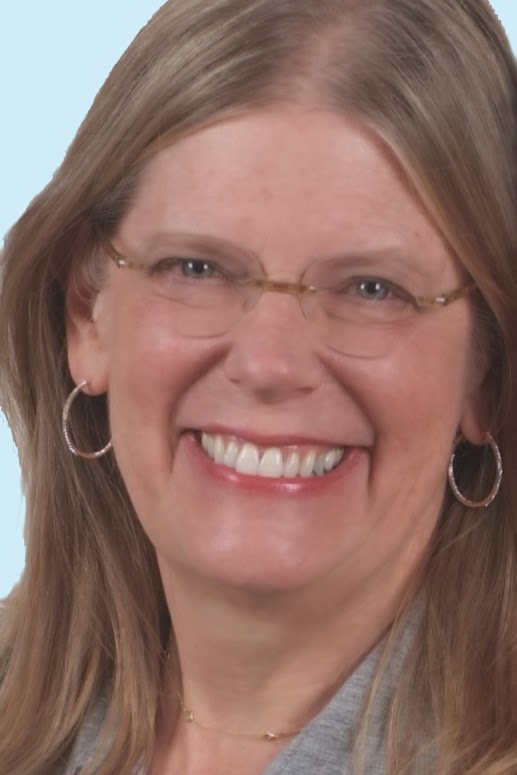
David Finkel
photo credit Bruria Finkel
David Finkel is the fifth Santa Monica public leader in this series of interviews with Santa Monica political thinkers.

Previous columns featured Patricia Hoffman, Co Chair of Santa Monicans for Renters Rights; Patricia Bauer, Co-Vice Chair of the North of Montana Organization; former Planning Commissioner Gwynne Pugh; and former Mayor Nat Trives.

Susan:  The political leaders columns started because I had been hearing from people all over the City that there was a “disconnect” between the Council Members and City residents.  Do you agree?

David:   No, I don’t think we have a disconnect.   I think what we have is pluralism.

In the old days, and by old days I mean late ‘70’s and early ‘80’s, everyone was on the same page because there was an overwhelming interest in protecting renters and stopping the rush to demolish apartments and replace them with condo developments.

The general concern of most people to protect tenants hasn’t changed but
by dint of the changes in value of land and changes in state law a lot of tenants were driven out of the city.  Mandated by the State, Vacancy Decontrol started a pattern of change where tenants were driven out and that resulted in a change in the population as the new people who came to Santa Monica had higher incomes and were able to afford the new rents.   The difference in income levels increased disparity of interest between the changing populations.

For example – a young couple moving into a market value apartment in Santa Monica are paying a high rent.   They are protected by rent control from their rent increasing unrestrictedly.  But they want a high-end life.  So they support rent control and also support the new stores, new restaurants and new industries we’ve seen come to Santa Monica.  

I say this in an effort to describe the changing dynamic of the population whose interests coincide with both the old and the new.

This new population came to Santa Monica for the stimulating environment of the City.   They liked the political alertness, the physical environment, the high tech image, the commitment to sustainability.  They wanted to be a part of a city with thinking, intelligent, on the move people.

At the same time you have a lot of folks who have lived here a long time and are holding on.  Each of these two groups, different as they are, have an interest in rent control.  For that reason you can understand why SMRR endorsed people keep getting reelected even though there may be significant differences on many other issues.

Rent control has become a value that is part of the fixed constellation in Santa Monica. 

Susan:  For many reasons - a change in the overall market, the new population you are describing, the completion of the LUCE – there are now great development pressures on the City.   When people speak of a disconnect they almost always are speaking of development issues.   How do you feel about the new developments proposed for Santa Monica?

David:  I do think that the Miramar plans that I’ve seen are just too big.   The Gehry proposal is also too big and yet it’s stimulating.  Frank’s building is the one I think about the most because it is a classic example of the good and the bad together.  It is both interesting and disturbing to me at the same time.

I can’t talk too much about development because it’s not my area of expertise.  But I don’t understand why we can’t both have architectural gems and keep the values of our City.

Susan:   You talk about the issue being that the proposals are “too big.”  What does “too big” mean to you?

David:  Too big is a state of mind.  If we allow these projects to be built as they are proposed it may be fine but it will change the character of the city.   We have to know that.  If we allow some to be built we can’t deny others. 

If the projects as proposed are developed we will attract a different population and we will not be a progressive community anymore.  Because the change in character assures it will become a more standardized and conservative city.   It will be a change in the nature of the City. Those of us who are here because of the values and the stimulating environment won’t like it anymore.  It is a question of keeping the values of the city alive.

Susan:  You are a SMRR member, you sat on the Rent Control Board, and you were a SMRR City Council member.   There are now six SMRR endorsed Council Members. Why do you think the Council hasn’t been holding the line on development?

David:   The SMRR members are pluralistic.  Different Council Members became part of SMRR through different constituencies.   Pam, Gleam and Terry will frequently vote with the developers.   But all of them will hold the line of rent control issues because all the SMRR members and, in fact, most of the City supports rent control.

Pam came to SMRR through friends who were already on SMRR.  Gleam came through her work with the public school community.  She is an articulate lawyer and a very nice person and she tends to moderate.  She’ll listen and then she opens the door to developers and places limits on them at the same time.  Terry came through his excellent work on environmental issues.   Kevin gives a hold the line analysis on development and votes that way.   Kevin and Tony and Ted are the three SMRR Council Members who consistently hold the line on development.

SMRR itself is divided on the issue of development.   Their divisions are usually on where to draw the line rather than being pro the development point of view.  Although I must say that development issues were vigorously discussed at the most recent SMRR meeting.

Susan:  Tell us a little bit about yourself and your history in Santa Monica.

David:    I graduated from the University of Chicago and then went on to USC for law school.   From law school I went on to work with the progressive law firm of Margolis and McTernan.  I was still practicing law when my wife, the artist Bruria Finkel, and I moved to Santa Monica in the 1960’s.  I became a member of the Rent Control Board in 1981 and was a member for 5 years.  In 1986 I was elected to the City Council on the SMRR ticket.

I left the Council and ran for an open seat on the Santa Monica Municipal Court.  I sat on the Court until 2002.   While I was there we decided that the Courts would be both fairer and more efficient if we merged the Santa Monica Municipal and Superior Courts.  We began with a test period during which we could monitor our results.  Our model was successful and as result the entire State followed our example.

Susan:  You just recently resigned from the College Board.   What interested you about the College?

David:  When I was on the Council I came to realize the differences between the College, the Council and the School Board were harming the City.  They didn’t cooperate and they were at odds. 

I decided to make it my job to change that.  We’ve worked hard to develop harmony between the three groups.  This has benefited the City.   Two obvious examples are: the Civic Center development will have a pre-school and the College will run it; we have high school students taking college classes, as they are ready.   When the three groups work together it’s wonderful and it injects power and strength into the City.

Susan:  What is your vision for the future of the City?

David:  I want the city to be a small gem.  I want all the exciting new stuff and I want it to be small in size.   I don’t want the City to fall victim to what happens to other cities where money talks and ideas leave and the city becomes rich and boring.

What Say You?


January 10, 2014

Nat Trives: The Long View of the City

--> -->
Nat Trives:  The Long View of the City
Nat Trives       Courtesy Photo
SUSAN CLOKE
Columnist, Santa Monica Mirror

Nat Trives was first elected to the Santa Monica City Council in 1971, was re-elected in 1975 and served as Mayor from 1975 – 1977.  He has been a Santa Monica Police Officer, and is a professor at SMC and a volunteer for many civic and charitable organizations.

Nat Trives is the fourth Santa Monica public leader in this series of interviews with Santa Monica political thinkers.

This series is an opportunity for people to hear each other and to expand the public dialogue.  Previous columns featured Patricia Hoffman, Co Chair of Santa Monicans for Renters Rights; Patricia Bauer, Co-Vice Chair of the North of Montana Organization; and former Planning Commissioner Gwynne Pugh.


Q.  A lot of people in Santa Monica are saying there is now a disconnect between the voters and the Council.  What do you think?

A.   You ask about the disconnect between the Council and the people.   I am confident in the intellectual capacity of the Santa Monica voter.  The Santa Monica voter has a historical capacity for correcting ills.  If there was a problem – the voter took care of it. 

Let me give you an historical example.  Donald Douglas put Santa Monica on the international map.  WWII came along and Santa Monica is booming and Douglas becomes part of the international air travel world. 

There was a proposal to lengthen the runway to allow for the DC10. The community rejected that proposal and Douglas moved many of his activities out of town but the Santa Monica airport doesn’t have a runway long enough for the bigger planes and that’s what the voters wanted.

Or take the proposal for The Causeway Island Project in the 1970’s.  Perry Scott, the City Manager thought it was a futuristic idea to build this project and that it would be great for Santa Monica.  Three Council Members were defeated in the next election because they had supported the project.

The original proposal from Frank Gehry for Santa Monica Place was an incredible model of an enclosed 13 story Galleria.  But it was huge and the City Hall was packed at the hearings and the project was scaled way down.

In Ocean Park the Shores originally proposed to build 8 towers and only 2 were allowed.

Voters are like a governor on a truck.  If you’re going down a big hill in a truck you need something to make sure you can slow the engine down.

Q.  You have been paying attention to Santa Monica for most of your life.  You went SAMOHI where you were Class President and then on to SMC.  You’ve worked in the Santa Monica Post Office and you’ve been a Santa Monica police officer.  You were President of the Police Officers Union.   You went on to be a Council Member and Mayor of the City.  What differences do you see from your high school days to now?

A.  You’re talking to a guy who has been in this community since 1949 and I’ve seen a lot of changes.

Now we’re called Silicon Beach and we have smart, young tech savvy people moving into town.  When I walk down the Third Street Promenade I hear people speaking many different languages.  We’re a popular place for people to come to retire and a popular place for people to come to build their life.

Q.  Do you blame development for traffic congestion?

A.  Take traffic – you can’t get from point A to point B in the same way you used to.  So people blame development. 

I blame changing demographics.  It used to be early in the morning the heaviest traffic was eastbound because people were going to work.  Now people are backed up at the 26th St. off ramp to get to work in Santa Monica.

We need to do strategic thinking about work shifts, work force housing, but it takes time.

Let’s just say you’re planning to build and as part of the Development Agreement the developer has to provide x percentage of housing for your employees.   Then we have housing in the City for the people who work here and that makes the roads less crowded.

It is really important to think 30, 40, 50 years down the road when you’re in the planning business.

I’ve been wishing and working for a long time for rapid transit that would make people a lot more comfortable to get from Santa Monica to Los Angeles, Pasadena or Pomona and now it’s coming.

Q.   Will the light rail coming to Santa Monica reduce traffic on the street?

People will drive until and unless they realize it is more comfortable and cheaper and better to take light rail.  That will only happen over time.  It has to be more convenient.

I was on the Council when we added cross-town buses to the BBB.  It was to facilitate employees and students. 

And I want us to be a bike friendly community.  I hear complaints of discourtesy of the cyclists – not stopping at stop signs, etc.  And I hear complaints of discourtesy of drivers, texting when driving, etc.   

We have a wonderful, active community – jogging, cycling, walking.  We have to communicate with each other and market the fact that we have an integrated use of the roadways in Santa Monica.

Q.  What about the new and the proposed developments in town?

A.  Any time you can improve the iconic image of the city without harming what the locals think, well that’s the right mix.

Tvonga Park is amazing.  It was an enormous cost but the City deserves it.  We are a first class city and Tvonga Park will become another iconic destination point for Santa Monicans and for visitors.

I’m a Co-Chair of the Friends of the Miramar.  They started out with something that needed to be tinkered with.  They went through float ups and listened to people and they changed and changed.  Now they have a great architect with Cesar Pelli and they have made changes based on the last Planning Commission hearing and the public testimony. I think it will all be worked out.

My own personal history at the Miramar is that we’ve had so many celebrations there and so many important public events.  It’s a classic place.  No question that they’re going to keep the Morton Bay Fig tree and make it the centerpiece and there will be a new park on the corner of Ocean and Wilshire.

The new Michigan Avenue Plan is good stuff.  All the new bike friendly work is good stuff.

When General Telephone built their national headquarters on Wilshire and Ocean it was a big deal.  People ask how did we allow it to be built.   Let me tell you it’s got some pretty heavy hitters in there.  It’s a power building.

I don’t want Santa Monica to be Dubai but I’m not against height.  I want the City to continue to be a prime destination.  It’s good for when people came here to visit and spend their money supporting our city.  It’s good.

Q.  Let’s talk about some other kinds of changes.  You told me you were the first black person elected to the Council and the first black person to be the City’s Mayor.   What have you personally experienced?

When I was elected Mayor the City population was about 4.7% African-American, 8% Hispanic, 4% Asian.  The city hasn’t changed that much in ratio. But people of all colors now live all over the city.  I was written up in Parade Magazine as the ‘whitest black mayor in America.’  Their point was because the city was so white.

When Seymour Cohen voted for me for mayor he told me,  “Nat, you’re the guy for the job and I don’t give a damn what other people say.”    The April 16, 1975 Evening Outlook front page headline read “Nat Trives Sworn in As Mayor of SM.”

But I never experienced any thing that would smack as racism when I was mayor.  There was a general feeling of celebration when I was elected.  The Fox and Hounds owner was a friend of mine and we had a celebration party there and packed the place and we had also had a party at the Sand and Sea Club and pack the place there.

 I’ll tell you one story that would never happen now.  I had been student body president at Santa Monica High School and I was on a date with a white girl and we were in a car with some other kids.  Curfew was 10:00 and it was 10:10 and we were going home.  I was arrested for curfew violation.  This was pure racism on the part of the police.

I decided then and there to become a policeman and change the Department.  I spent a wonderful 11 years on the Santa Monica Police Force and they among the best years of my life.

I was at the Civic Auditorium providing police protection in 1964 when Sydney Poitier became the first black man to win an Academy Award for Best Actor for his role in “Lilies of the Field.”

I was head of the Police Union for five years.  We supported the mostly black and brown Sanitation Workers strike by giving them funds from the Police Union.  I was in the Governor’s Office when Pat Brown signed the most significant legislation for public employees.  My goal was to be the Chief of Police. 

I was working my way up the ladder at the Police Department when I took a promotion exam.  I got good test scores but only a 69 on the oral interview.  I knew something was wrong because I never did have any trouble talking to people.  Was that racism?  You can be sure it wouldn’t happen today.

Q.   What do you see happening this year in Santa Monica?

A.   The city council is not really the last resort.  The people are the last resort.  I honestly feel that people in general, not the core group of activists, judge the quality of their government by the level of service they receive.

I love this community.  I volunteer.  I offer my service.  I enjoyed being on the Council because I felt I could make a difference.  I always cared about equity.  I always waited for the Public Hearing to make up my mind because a Council Member had to keep up an open mind and listen to the testimony.

The biggest thing I’ve got going this year is that I’m planning my 80th birthday party.  30 local non-profit organizations will be beneficiaries of the party.   Please go online to the website and come to Pacific Park on the Pier on Dec 9, 2014.

Dear Reader, Do you think the coming development is a long term good for the City or a long term bad for the City? What do you think the City could do to improve traffic conditions now? What do you want the City to look like in 2030?  See you at Nat’s party!

Contact Susan Cloke
susan@smmirror.com

To read previous columns in this series go to:


http://www.smmirror.com/articles/Development/Gwynne-Pugh-The-Vision-Of-The-LUCE/39128


December 20, 2013

What Say You? Gwynne Pugh. The Vision of the LUCE


What Say You?  Gwynne Pugh.     
Gwynne Pugh
photo credit Augusta Quirk
The Vision of the LUCE  
SUSAN CLOKE
Columnist, Santa Monica Mirror

Gwynne Pugh, former Planning Commissioner, Soccer Coach, Architect, Engineer, and Urbanist is the third Santa Monica public leader in this series of interviews with Santa Monica political thinkers.

This series is an opportunity for people to hear each other and to expand the dialogue.  Previous columns featured Patricia Hoffman, Co Chair of Santa Monicans for Renters Rights; and Patricia Bauer, Co-Vice Chair of the North of Montana Organization.

To read previous columns in this series go to:


Often seen around town on his bicycle Gwynne Pugh began our interview talking about the future of cycling in Santa Monica.

Is your bike your first transportation choice?  Talk about what it’s like to ride in traffic, how you choose routes, what being a cyclist does to your perspective on the City.

Unfortunately my bike is not my first transportation choice, partly because I need to use the car for business. In London cycling was my first choice of transportation because it worked best.

I grew up cycling in London, Paris, Athens and Istanbul, cities where traffic is a lot crazier than it is here.  So I’m 100% comfortable with riding in cities.

I am concerned about bike safety in Santa Monica because of all the conflicts – joggers down the centerline, walkers that don’t stay to the right, etc.

As a cyclist my perspective has to be that I am the responsible one.  I watch for everyone and assume that I am not visible to others.  It’s both defensive riding and assertive riding.

For cycling to really work as a transportation choice in Santa Monica we need to get to critical mass.  Bike riders, motorists and walkers all need to pay attention to each other and to acknowledge each other.  That is starting to happen in Santa Monica and will happen more and more as more and more urban cyclists are on the city streets. 

As a Planning Commissioner you were key to the LUCE (Land Use and Circulation Element) discussion.  What do you think now about the LUCE, the process, and the benefits to the City? 

I think the process, which went in fits and starts, a six-year process with various stall points, was re-energized when Eileen Fogarty came.  She and Lamont Ewell went out into the community in an intense listening process.  What was developed out of it was a very smart plan.  It protected the neighborhoods and addressed the issues of traffic head on understanding that traffic could not be allowed to increase.  The Luce established that there could be no new net peak pm trips.

The LUCE addressed issues of economic viability, social justice, and sustainability. Doing so in part by directing development to the Downtown, Bergamot and the Boulevards.

In the early ‘90’s buildings in the industrial zones in Santa Monica got repurposed to house software technology and film industry companies.  As a consequence we became job rich.

In mid 2000 City population was about 85,000.  The population increased during the workweek to about 150 thousand as about 60 thousand people came into the City for work or business and students came to Santa Monica College and tourists come to the City. On weekends that number grew to 250,000.

Development in the LUCE was planned to balance the jobs rich and housing poor ratio facing the city and contributing to our traffic problems. 

Are there stumbling blocks to implementing the LUCE vision of the City?

I think Eileen was a person that people in the community trusted.  There was a process in the City that made in difficult for her to stay on and that created a problem for the implementation of the LUCE

People got upset and scared when they saw development starting up again.  Development had been stalled by the recession as well as by waiting on the completion of the LUCE.  The backlog has led to many projects at all once and that has given people pause.

Additionally, the City decided to follow the Development Agreement process over other planning tools until all the implementation of the LUCE was complete.  We need to use all the tools in the planning toolbox and not use a Development Agreement for every project.

Major projects need a high level of public scrutiny.  Other projects, especially those that would have been permitted under the previous LUCE, need to be processed in an easier way for the Community, the Developer and Staff.

Do you see yourself as an environmentalist?  What does that mean to you and how do you express that commitment in you work and your life?

I do see myself as an environmentalist.  Being an environmentalist is about sustainability, community, social justice and economic viability.  As an Urbanist I want to think about how we live and how we use our resources.

I think Santa Monica would benefit from denser nodes.  The advantage of density is this is has a self-sustainability.  You need about 1600 houses to support a full block of retail.  With sufficient density you can create a positive economic environment and a positive environmental benefit. 

How is the City doing in meeting its sustainability goals?  Is there more the City could do?

The City is both doing a great job and also not doing as well as it wants to do.  The City Report Card on Sustainability reflects the idea that sustainability is about art and culture and feeding souls as well as cleaning water. 

While the City is working diligently toward those goals the environmental footprint has shrunk but it is still vast.  You can see all this information in the City websites.


Traffic problems and traffic complaints and traffic fears are heard everywhere in the City.  How long it takes to get from here to there in SM compared to how long it used to take is a major concern for people now.  Is it for you?  Do you see traffic as a problem for the city? 

Traffic is a problem.  We won’t know how successful we can be until the Expo Line is in.  Ridership on Phase 1 is already exceeding expectations with approximately 27,000 daily riders.  By 2030, the estimated ridership is 64,000 daily riders.

Right now Santa Monica is making a significant effort for Traffic Demand Management.  Van pooling, cycling with lockers and changing rooms and new bike lanes, transportation management requirements are now part of Development Agreements.  The college issues free Big Blue Bus passes. All of this should reduce congestion in the near term.

Importantly, walking should be given its due consideration as a mode of transportations.  Shops, parks, and schools need to be within a ¼ mile radius to make for a walking city.

How do you gauge the impact of development projects and new buildings and new construction, both public and private on traffic flow, volume and patterns.

One of the things we talked about when we developed the LUCE was to set goals, to measure results, and to make adjustments, as necessary.  That was built into the LUCE.

We need to measure and adjust, continuously and on an ongoing basis.

From your vantage point what could City Hall, either at the Staff or the Council level, do to address traffic issues.

There is more to be done and the City knows it. 

They are working with the Big Blue Bus.  They have put an emphasis on the Expo Line.  They are working on transit-oriented housing and development and they are increasing Traffic Demand Management requirements.

The City will take a series of actions including education, incentives and deterrents.  City Hall needs to apply pressure to make this happen.  To give them their due, they are aware of the problems and are working diligently.

You are no longer on the Commission, but have you read the draft of the new zoning code?  Does it promote both the letter and the spirit of the LUCE?

I’m currently reading the draft zoning code.  I’m concerned about the didactic nature of the Design Standards and Guidelines.  We need to empower the Architectural Review Board and the Planning Commission and be more flexible about Guidelines and Standards.  Objectives must be more clearly stated and decision makers and the public need more flexibility.  The process needs to be less rule-bound.

How about the public projects?  Do Tongva Park, Ken Genser Square, the forthcoming Colorado Esplanade and Expo line meet the goals of excellence and aesthetics set by the LUCE?

I think they do.  Tongva Park is of the highest quality and it’s interesting in that it is so specific and ornate.  The jury will be out until about 5 or 10 years down the line when we learn how it’s received and used.

The Expo line is essential to the future viability of Santa Monica and The Colorado Esplanade is the connector we need between Expo and the Beach and the Downtown.  It is key.

Are there other pressures and influences on the City that will bring change to the City?

The demographics are changing.  Obviously we have a significant long-term population.   We also now have many people living here that move often – Silicon Beach workers, the Millennials.  We have people in high-level jobs looking for density and public transportation and bike paths.  They use public spaces to meet, work, and socialize and often live in smaller spaces.  This is already impacting design in the City.

You are a City resident, an architect, an urbanist. Could you look into your crystal ball? Please tell us your hopes and dreams for Santa Monica and describe your vision of the City in 2030.

I see a thriving, complete city welcoming of all people and supporting all modes of transportation.  A culturally rich city, a great place to have kids, affordable for families, a place where people can both live and work.  A city of beaches and parks and wonderful public spaces that is exciting, interesting and vibrant.

Dear Reader, Do you think the coming development is a long term good for the City or a long term bad for the City?  What do you think the City could do to improve traffic conditions now? What do you want the City to look like in 2030?

What Say You?


December 1, 2013

Hometown Hero: RoseMary Regalbuto

-->
RoseMary Regalbuto CEO Meals on Wheels West
Photo Credit:  Joe Regalbuto


Hometown Hero:  RoseMary Regalbuto 
SUSAN CLOKE
Columnist, Santa Monica Mirror
November 29, 2013

RoseMary Regalbuto is retiring after 26 years at Meals on Wheels.  “I loved the job and I still love it and it fulfilled me as a person.  It’s been wonderful for me.  I got a tremendous feeling out of this job – a feeling of self, of accomplishment and doing something that other people benefit from.”

Regalbuto, the Head of Meals on Wheels West reported with pride that 80,000 meals were delivered to homebound seniors in 2013.

Meals on Wheels volunteers deliver two meals a day and a daily newspaper.  They bring homebound seniors voter registration materials and keep them informed about City services and other available services.  The volunteers get to know the people on their route.

A typical hot meal for lunch might include spaghetti and meatballs, carrots and string beans, a roll and butter, juice and milk, and fruit.  Another day it might be Eggplant Parmesan with green beans and carrots, salad, a roll and butter, juice and milk, and fruit.  Another, lighter meal might be a raisin bagel with cream cheese, a salad and fruit.  “It’s all fresh,” said Regalbuto, “and prepared under the supervision of a dietician and approved by the County.”

The Farmer’s Markets are now supporting the Meals on Wheels program.  Fresh fruits and vegetables are part of every meal.  Participating farmers get tax credits.  Casa del Mar, Loews and other hotels also participate and provide meals.  RoseMary Regalbuto said, “I’m amazed at how generous people are.”

Money comes from public donations and Meals on Wheels holds regular events that have become important occasions in the community.  LA Marathon runners raise funds for Meals on Wheels.  The City of Santa Monica contributes $45,350 per year, LA County contributes $102, 000.  More money is raised from direct mail solicitations.  It takes a lot of money to prepare 80,000 healthy meals and this year’s budget is $775,000.

Volunteers deliver all the meals.  Meals on Wheels have almost 500 volunteers who work with Volunteer Coordinator Joanna Vasquez.  Volunteers tend to stay a long time.  Betty Darling, a volunteer, told RoseMary, “Bringing people meals is like visiting my friends.”  Google volunteers have a route they do every Thursday.  Regalbuto said, “They get to know their people.  They held an art show for one of the people on their route who is an artist.”

“Volunteers are on the front lines.  The volunteer may be the only person the majority of the clients see that day.  Most clients are between 85 and 105.  We now have 3 over age 100.  Our youngest client is 27, she was in a car accident, and will be homebound throughout her recovery,” said Regalbuto.

The program that inspired the American Meals on Wheels started in England during the Blitz.  Meals were delivered to people who had lost the ability to cook their own food because of the bombing of England by the Nazis.  This group, named “The Women’s Volunteer Service for Civil Defence’ came about when the group started to deliver meals to servicemen.

The first home deliveries in England used old prams with food packed in straw to keep the meals warm in transit. (Wikipedia)

Now Meals on Wheels delivers meals in England, Canada, Australia and the U.S. to the housebound.  Most, but not all, of the recipients are elderly.

Although it wasn’t yet called Meals on Wheels, the program got its U.S. start in 1954 in Pennsylvania.  High School students delivered meals to homebound seniors and other people unable to leave their houses or to prepare their own meals.  Recipients were visited once a day and received a hot lunch and a sandwich and milk to be eaten at dinner.  The idea spread to Ohio and New York.

In 1960, in San Diego CA, a group of women started Meals-on-Wheels of Greater San Diego and 50 some years later that organization is still providing meals and human contact to housebound seniors.

The national association, Meals on Wheels Association of America, used the San Diego model to create the national program to keep seniors independent in their own homes.

Leaving no doubt that hunger among the elderly is a serious problem in the U.S., Meals on Wheels commissioned a 2007 study on hunger in the U.S. and found that over 5 million seniors “experience some form of food insecurity.” 

This is especially true for seniors living alone, seniors with low incomes, seniors caring for a grandchild, and it is true in both urban and rural parts of the U.S.  (Ziliak, Gundersen and Haist. (2007) The Causes, Consequences and Future of Senior Hunger in America, University of Kentucky Center for Poverty and Research, Lexington, KY.)

In Santa Monica, Meals on Wheels West was started as a program of the Westside Ecumenical Conference.  In 1987 RoseMary Regalbuto became the CEO of Meals on Wheels West.  Under her leadership the organization continued to serve Santa Monica and grew to serve Topanga, Pacific Palisades, Malibu and parts of Marina del Rey.

Meals on Wheels West is central to making it possible for many homebound seniors to stay in their own homes and often the Meals on Wheels volunteer is their only daily contact.  Because the volunteers stay with the organization for so long and deliver meals to the same people they often develop significant and lasting connections.

Thanksgiving is the perfect time to talk about the work of RoseMary Regalbuto.  She lives the words of the poet Maya Angelou, “When we give cheerfully and accept gratefully, everyone is blessed.”


November 8, 2013

What Say You? Patricia Bauer talks about the "Council Disconnect."


What Say You?  Patricia Bauer talks about the “Council Disconnect”
Part of a series of columns featuring Santa Monica political thinkers.
SUSAN CLOKE, Columnist
 
Patricia Bauer
Co Vice-Chair NOMA
“Despite the unanimous opposition of every one of the neighborhood associations, as well as opposition from the Recreation & Parks Commission and the Landmarks Commission, the Council chose to allow commercial fitness trainers in Palisades Park.  We’re very disappointed.  NOMA will be continuing to discuss this issue,” said Bauer.  “Personally, I’d like to see the Council reopen the conversation about the parks ordinance and remove Palisades Park from the list of parks in which commercial training is permitted.

“Speaking in a general way,” she said, “there seems to be a disconnect between the Council and the neighborhoods. This leaves many people in the community to wonder whether the Council cares much about what the neighborhoods and the residents have to say.

Patricia Bauer was born in Detroit, went to the University of Michigan at Ann Arbor, worked at the White House Press Office during the Carter Administration, and went on to work at the Washington Post.  After she and her family moved to Santa Monica, she worked at the Los Angeles Times.

“We came here for the schools and the fresh air, and we fell in love with the town.” Bauer said.

Bauer was pulled into local politics when the City proposed to replace the iconic Palm trees in her neighborhood, on an as needed basis, with Sycamore trees. Bauer loves Sycamores but this was not the right location.   The Palms are the signature tree of her neighborhood. They were part of the identity of the neighborhood and Patricia Bauer, as she would learn later, was only one of many neighbors opposed to the plan.

Bauer turned to her neighborhood organization, NOMA, the North of Montana Association, one of the seven major neighborhood organizations in the City, but the organization was almost inactive at that time.

Support for keeping the iconic Palm trees was high and the neighborhood pulled together to save them.  Their efforts were successful and “the City reversed course and agreed to replace palms with palms on the historic palm streets,” said Bauer. “Then we went on to work together to revitalize NOMA.”

Now, as Co Vice-Chair of NOMA, Bauer is a leader working with NOMA to actively oppose the commercial use of Pacific Palisades Park by fitness trainers, whose presence in the park has grown in recent years.  In their letter to Council Members NOMA wrote:

We are now faced with the prospect of city-authorized private businesses using Palisades Park land for profit-making purposes that directly contradict the original intent of our founders. If the ordinance is enacted as currently written, private businesses will be free to use taxpayer-supported lands as their private fiefs, interfering with the public’s use and enjoyment of the historic lands that make up Palisades Park.


All the neighborhood organizations are talking with one another on this and many other issues.”  Bauer adds, “On development. NOMA has gone on record calling for the Council to slow down its rush to develop the city. Our residents are happy with the size and scale of our built-out city, and are concerned about growing traffic and congestion around town. They strongly question whether the intense development that is contemplated now will worsen the quality of life for everyone.

“Voters wonder: Where’s the accountability, and why did the Council vote down a measure that would have them disclose their campaign connections before voting?  Why is it okay in Santa Monica for Council Members to vote on measures that are backed by the campaign contributors who put them in office? Why are the developers’ voices heard so much more strongly than the voices of taxpayers, residents and voters? Whose interests are really being served here?”

 “Follow the money,” famously said the investigative journalist Bob Woodward in “All the President’s Men.”  It was advice Patricia Bauer often heard him give when she was a new reporter for the Washington Post.  Now Bauer is asking that question about the Santa Monica City Council.

“When you look at Mayor Pam O’Connor’s campaign contributions, as publicly reported, both before and after the recent elections her campaign was heavily financed by developers,” Bauer said.  “Ms. O’Conner had campaign debt from her 2006 election.  In March of 2008 people associated with one developer paid it off. That developer is Hines, the company behind a massive project that is currently proposed for the Bergamot property. People have begun to wonder about the Mayor’s close relationship with that developer.

“It’s interesting to note that something similar also happened in March of 2005, following Ms. O’Connor’s election to Council. Her campaign debt then was also paid off by people associated with a developer who had a pending development proposal in the city: Macerich.”

 I have a sense, and am hearing all over town that others share my sense, that people feel the Council is ignoring the wishes of the residents.  Anger is building. People are feeling ignored. When voters get angry, they speak with their votes.

So Says Patricia Bauer of NOMA

What Say You?